

Cribbage - Classic Card Games
MobilityWare
I found Cribbage - Classic Card Games easy to pick up and surprisingly demanding once I stopped treating every hand as a quick distraction. It is a free card game from MobilityWare, built around the traditional cribbage format rather than a collection of unrelated modes. That focus is its biggest strength: the app gives me a compact strategic routine I can return to whenever I have a few quiet minutes.
My first impression was that this is best understood as a digital cribbage table, not a broad card-game hub. The familiar scoring system remains the center of attention, so the appeal depends heavily on whether you enjoy counting combinations, weighing risk and reward, and making decisions with incomplete information. If you already like cribbage, the mobile format feels natural. If you want a game that teaches itself through constant action, the opening may feel slower than a typical casual card title.
How Cribbage holds up beyond the first week
The first few sessions reward careful observation
The early appeal comes from the rhythm of a hand. I choose cards, consider what might help the crib, play through the pegging sequence, and then watch the scoring turn a modest-looking hand into a meaningful result. That cycle is short enough for a break but layered enough to make each decision matter. The game does not need flashy presentation to create tension; the uncertainty around the crib does most of the work.
One useful habit is to stop judging a hand only by its immediate points. A pair or a connected run may look attractive, but discarding those cards can also give the opponent a valuable crib. I found myself improving faster when I asked two questions before every discard: how many points am I keeping, and what kind of hand am I helping create for the other side? That small change makes the game feel far more strategic than simple card matching.
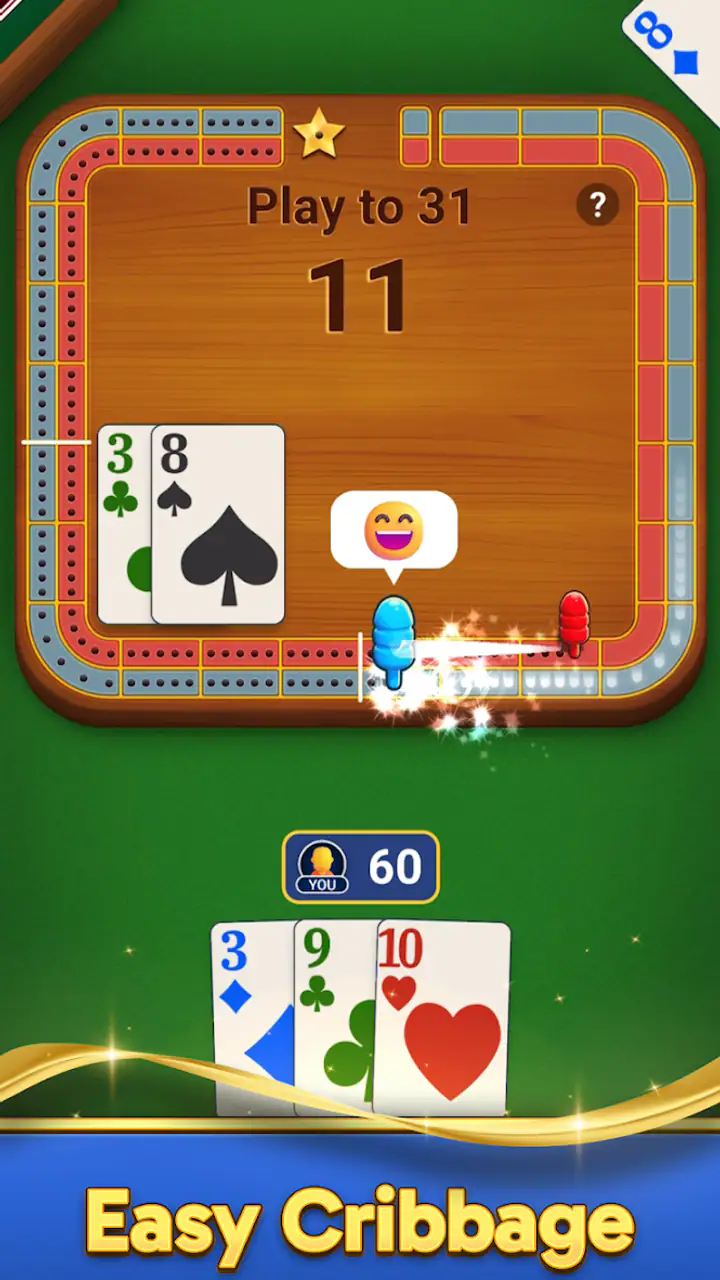
The pegging phase is where the app becomes especially good for short sessions. I can play a few cards without committing to a long match, yet every play still carries consequences. Holding back a fifteen, avoiding a dangerous total, or saving a card that may complete a run later gives the experience a satisfying sense of timing. These are not complicated controls, but they encourage active thinking rather than passive tapping.
Related News






For a newcomer, the main hurdle is learning how cribbage scoring fits together. Fifteens, pairs, runs, and the special role of the starter card can make the first games feel mentally busy. I recommend playing slowly at the beginning and checking why a hand scored the way it did instead of rushing through the animations or results. Once the patterns become familiar, the same scoring that initially feels intimidating becomes the reason to return.
A realistic everyday use case
I can see myself opening this while waiting for an appointment, sitting on a train, or winding down after dinner. A short match gives the moment more structure than scrolling through social media, and the game is quiet enough to suit a shared room. It also works well as a mental reset: I have to focus on the current hand, but I do not need to remember a large story, manage a complex inventory, or learn a long sequence of controls.
The best sessions are not necessarily the ones where I win. Sometimes the useful outcome is noticing a mistake, such as giving away a strong crib because I chased a tempting combination in my own hand. That makes the game suitable for players who enjoy gradual improvement. It is less suitable for someone who needs constant novelty, rapid rewards, or a strong sense of progression between matches.
Gallery
What makes the first week satisfying
During the first week, the variety comes from the cards themselves and from the changing decisions around them. The rules stay stable, but the problems do not. A hand that looks weak may still be worth protecting if the discard is safe, while a hand with several scoring possibilities may be dangerous if it leaves the opponent an easy crib. This gives the app a useful learning curve without requiring a large ruleset.
My practical advice is to separate learning from winning. In the beginning, focus on recognizing common scoring shapes and on understanding pegging totals. Later, pay more attention to defensive discards and the score position. When you are ahead, a conservative choice can be better than maximizing your own hand; when you are behind, accepting more risk may be necessary. That shift from “best hand” to “best decision for the match” is where the game starts to have lasting value.
Why the month-to-month question matters
After the novelty fades, a focused card game needs to offer a reason to come back. Here, the recurring value comes from mastery rather than content consumption. I do not expect to exhaust the basic challenge because each deal asks me to evaluate probabilities, timing, and the opponent’s likely options. The board may look familiar every time, but the choices are not interchangeable.
That also means the app will appeal more to a particular kind of player. I would recommend it to someone who enjoys replaying chess puzzles, practicing solitaire decisions, or revisiting a board game to sharpen technique. I would not recommend it as the main choice for a player who measures value by a large number of characters, maps, unlocks, or constantly changing events. Cribbage offers depth through repetition, not through a stream of new material.
The game’s average rating is 4.4 from around 1.3 thousand ratings, while its reach has passed 100 thousand installs. Those figures suggest that it has found an audience among people who want a recognizable card game on a phone, but they do not change the central trade-off: its long-term appeal depends on liking cribbage itself. The app can make the format convenient, but it cannot make a traditional scoring game feel exciting to someone who dislikes careful calculation.
How I would use it as a regular habit
I would keep sessions short and purposeful rather than playing until the game becomes background noise. A good routine might be one match during a daily break, followed by a quick mental review of the most important discard or pegging decision. That approach gives the game a training quality and helps prevent the familiar rules from becoming automatic tapping.
Another useful approach is to choose one skill for a week. I might concentrate on protecting the opponent’s crib, then move to counting likely pegging outcomes, and later work on recognizing when a risky play is justified by the score. This turns repeated matches into deliberate practice. It also gives the app more staying power than simply chasing a winning streak.
The trade-off is that there is no need to open it every day. If I am tired or looking for something relaxing with almost no mental effort, cribbage may be the wrong choice. The scoring and discard decisions ask me to pay attention. That is a strength when I want a focused break, but a weakness when I want a purely passive pastime.
Maintenance is light, but attention is still required
From a player’s perspective, the maintenance burden is low because the core experience is self-contained. I do not have to learn a new system every time I return, rebuild a collection, or keep up with a complicated strategy meta. The current version is 1.1.5.444, and the game supports devices running Android 8.0 or later, which makes it approachable for people using older compatible phones.
That simplicity does not mean the app is friction-free. Traditional cribbage asks me to remember several scoring relationships, and the mobile format can make that learning feel less tangible than playing with a physical board. With real cards, I can physically arrange combinations and see the crib develop on the table. On a phone, the app handles the presentation, which is convenient but may reduce the sense of ownership for players who enjoy manually counting everything.
I also think the free price changes how I judge the experience. It is easy to try without making a commitment, and that suits a game whose appeal can be understood within a few hands. At the same time, free access alone does not guarantee lasting value. The real test is whether the compact strategy remains enjoyable after the initial curiosity has gone. For me, it does, but only because I like examining small decisions repeatedly.
Where fatigue can appear
The biggest source of fatigue is repetition without a personal goal. If I play one match after another with no attention to improvement, the familiar dealing and scoring sequence can start to blur together. The game does not need to be defective for that to happen; it is simply the natural limit of a focused traditional card format.
I can also imagine frustration when a hand turns badly despite a sound decision. Cribbage includes enough uncertainty that good play will not produce a win every time. Players who dislike losing to an unlucky deal may blame the app even when the underlying appeal is precisely the balance between judgment and chance. I found it healthier to evaluate decisions over several sessions instead of treating one result as proof that a strategy worked or failed.
Another possible weakness is the learning curve for people unfamiliar with the rules. The game is rated for Everyone, and that makes sense in terms of broad accessibility, but age suitability does not remove the need to understand the scoring system. A younger or completely new player may need patient explanation before the app becomes enjoyable. It is a good choice for learning together with someone who already knows cribbage, but less ideal if you expect instant understanding from the first tap.
How it compares with other card-game choices
Compared with solitaire, this game gives me more direct strategic interaction because the crib and pegging decisions involve an opponent rather than only the arrangement of my own cards. Solitaire is often better when I want a solitary puzzle with a familiar flow and less pressure from another player’s score. Cribbage feels richer when I want to think about defense and timing.
Compared with collectible card games, it is much easier to maintain. There are no decks to assemble, card pools to study, or changing combinations to follow. That is excellent for someone who wants a stable ruleset and a quick start. The downside is that it lacks the personalization and discovery that make collectible games compelling for many players.
Compared with a physical cribbage board, the app wins on convenience. I can play without carrying cards or finding table space, and the digital format handles the routine of scoring. The physical version remains better for social play, teaching someone face to face, and enjoying the tactile movement of pegs and cards. I would choose the app for solo practice and portability, not as a complete replacement for a shared table.
Who should install it, and who should skip it
I think it is a strong fit for existing cribbage fans, card-game players who enjoy probability, and anyone looking for a compact activity that rewards concentration. It is also a sensible option for people who want a free game with an Everyone content rating and a traditional identity rather than an overloaded menu of systems.
I would steer away from it if your ideal mobile game needs a story, social competition, rapid action, or frequent visual change. I would also skip it if counting combinations feels like work rather than play. The app cannot hide the character of cribbage, and that honesty is useful: it serves the right audience well instead of trying to become something broader.
My long-term verdict
After the first-week appeal wears off, Cribbage - Classic Card Games earns space on my phone because its replay value comes from decisions, not novelty. I can return to the same rules and still find a different problem in the discard, the pegging order, or the score situation. That is a durable kind of entertainment, especially when I want a short game that leaves me feeling mentally engaged.
It is not a universal recommendation. The focused format can feel repetitive, the scoring takes time to learn, and players who prefer constant progression will probably find more satisfaction elsewhere. Even so, those are limitations of fit rather than signs of a poor implementation. MobilityWare has chosen a clear purpose, and the app works best when I accept that purpose instead of expecting a larger card-game collection.
My final advice is to give it several thoughtful hands rather than judging it from one quick round. Learn why the points appear, pay attention to the crib you create, and treat losses as information about risk. If that kind of slow improvement sounds enjoyable, this free card game has enough recurring value to become a dependable break-time habit. If you want spectacle or endless new content, it is better to choose a different category of game.
For me, the deciding strength is the balance between portability and genuine strategic practice. It turns a traditional tabletop game into something I can keep nearby without demanding a large time commitment. That is not flashy, but it is exactly why I would recommend it to a friend who likes thoughtful card play and wants an app that can remain useful after the initial curiosity disappears.
FAQs for Cribbage - Classic Card Games
What is Cribbage - Classic Card Games, and how is it played?
Cribbage - Classic Card Games is a digital version of the traditional cribbage card game, where players score points by creating combinations in their hand, crib, and play sequence. The objective is usually to reach 121 points before the opponent. The app handles counting, pegging, turns, and scoring, making it suitable for beginners as well as experienced players who want a convenient way to practice.
Can beginners learn how to play cribbage with this app?
Yes. The app is generally approachable for newcomers because the digital format keeps track of scores and helps reduce mistakes during play. However, cribbage has several rules involving pairs, runs, fifteens, flushes, and the special starter card, so new players may still need time to understand the scoring system. It is best to use the early games as practice and pay attention to the scoring feedback.
Does Cribbage - Classic Card Games work without an internet connection?
The availability of offline play can depend on the version and platform, but classic card-game apps commonly offer single-player games against computer opponents without requiring a constant connection. This makes the game useful during travel or when mobile data is limited. Online features, advertisements, updates, leaderboards, or other connected services may still require internet access, so check the store listing for the current requirements.
What game modes and difficulty options are available?
Cribbage - Classic Card Games is designed primarily for traditional cribbage matches, typically allowing you to play against an automated opponent. Depending on the installed version, you may find several difficulty levels, customizable rules, statistics, or different visual themes. Difficulty settings are especially useful because beginners can start with a more forgiving opponent, while experienced players can choose a stronger challenge and test their strategy.
Is Cribbage - Classic Card Games free to download, and does it contain ads or purchases?
The app may be available as a free download, but free versions of mobile card games often include advertising or optional purchases. Ads can appear between matches or in menus, while paid options may remove advertising or unlock additional features. Pricing and availability can differ between Android and iOS and may change over time, so review the official store page before downloading and confirm whether any purchase is optional.
Pros
- Clear scoring system helps beginners learn cribbage quickly.
- Playable offline
- making it useful during travel or without internet.
- Short matches fit well into quick gaming sessions.
- Multiple difficulty levels provide a suitable challenge for many players.
- Classic card visuals keep the gameplay easy to follow.]
- contras:[
Cons
- Limited variety may feel repetitive after extended play.
- Computer opponents can seem predictable at lower difficulty levels.
- Some features may require watching ads or making in-app purchases.
- Small card details may be harder to read on compact screens.
- Less appealing for players seeking modern graphics or deep customization.


